Quick answer: Back pain from driving a truck usually comes from long hours of sitting, whole-body vibration, poor seat setup, lifting and climbing after sitting still, and sleeping on a thin mattress that doesn't support the spine. What helps most: adjust your seat and lumbar support, take short movement breaks, stretch your hips and hamstrings, warm up before you lift or tarp, and sleep on a supportive mattress sized to your bunk. See a doctor if pain is severe, spreads down a leg, or comes with numbness.
Ask a room of drivers who's had back pain and most hands go up. It's one of the most common complaints in trucking, and it's no mystery why — the job combines most of the things that strain a back. The good news is that a lot of it is in your control.
Why truck drivers get back pain
1. Sitting for hours at a time
Up to 11 hours of driving in a day keeps your hips flexed and your lower back loaded. Over time, hip flexors tighten and core muscles that should support your spine get lazy.
2. Whole-body vibration
Road vibration travels up through the seat and into your spine for hours. Research on professional drivers has long linked whole-body vibration with lower back problems. A good air-ride seat, properly adjusted, takes some of the edge off.
3. Poor seat and steering setup
A seat that's too far back makes you reach and slump. No lumbar support lets your lower back round out. Small adjustments add up over thousands of miles.
4. Going from sitting to lifting
Climbing out after hours in the seat and immediately throwing chains, pulling a tarp or bumping a dock plate is a classic way to tweak a back. Cold, stiff muscles don't handle sudden load well.
5. Sleeping on a mattress that doesn't support you
This one gets overlooked. You can do everything right during the day and undo it at night on a thin, sagging stock mattress. When your hips sink lower than your shoulders, your spine sits out of line for hours — and you wake up stiffer than when you lay down.
What actually helps
Set up your seat properly
- Sit all the way back so your lower back touches the seat.
- Adjust the lumbar support to fill the curve of your lower back. If your seat doesn't have one, a lumbar cushion or rolled towel helps.
- Knees slightly lower than or level with your hips.
- Close enough to reach the wheel with a slight bend in your elbows.
- Take your wallet out of your back pocket — sitting on it tilts your pelvis.
Move every chance you get
Use fuel stops and your 30-minute break to walk, even for five minutes. Movement brings blood flow back to tight muscles and resets your posture.
Stretch the muscles driving tightens
Hip flexors, hamstrings and glutes take the hit from long hours seated. Simple stretches — a standing hip flexor stretch against the trailer, a hamstring stretch with your heel on the step, a figure-four glute stretch — take a few minutes and can be done right at the truck.
Warm up before you lift
Before tarping, chaining or unloading, take a minute to walk and loosen up. Lift with your legs, keep loads close, and don't twist while you're carrying something heavy.
Fix your sleep setup
Your bunk should keep your spine in a neutral line whether you sleep on your back or side. That means a mattress with enough support to stop your hips from sinking and enough cushion to relieve pressure at the shoulders.
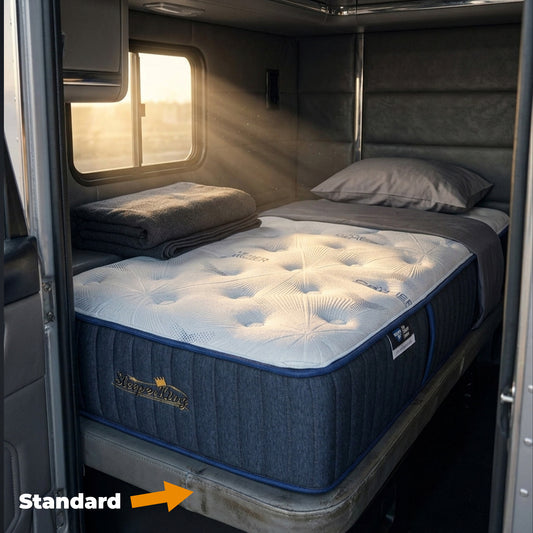
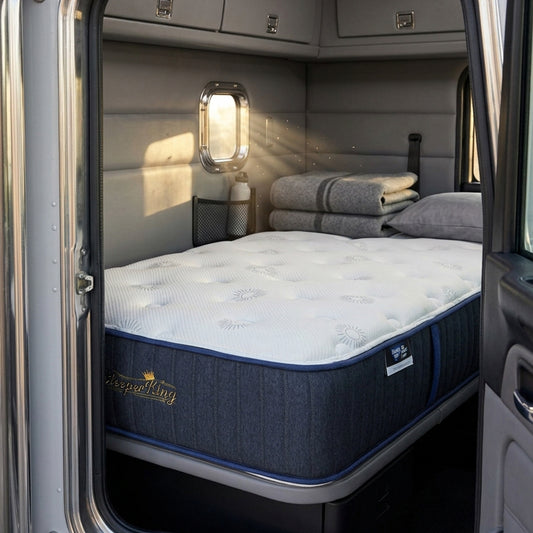
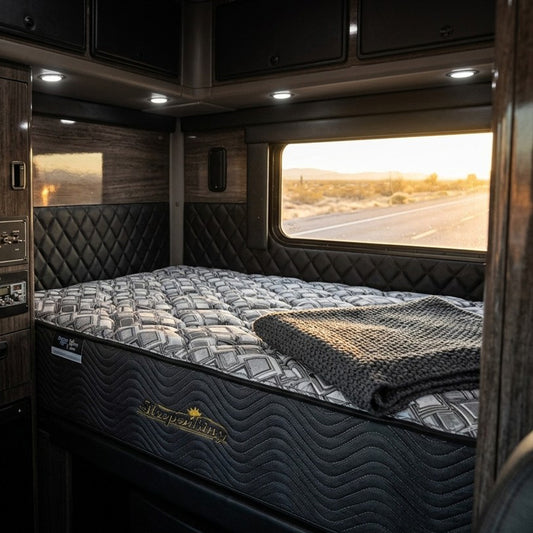
The SleeperKing Serenity was designed with lower backs in mind: 1,000 comfort coils plus a copper-infused lumbar layer that adds targeted support in the middle of the mattress. If you prefer a firmer bed, the Classic uses 850 individually encased coils, and the Premium adds a three-zone support system for spinal alignment. All three are 12-inch hybrids in 36×80, 39×80 and 42×80.
Compare them side by side in our best semi truck mattress guide, or read our tips on sleeping in a semi truck.
Make sure it fits, too: a mattress that leaves a gap or buckles in your bunk won't support you properly. Check our semi truck mattress size guide before you order.
When to see a doctor
This article isn't medical advice. See a doctor if your back pain is severe, lasts more than a few weeks, travels down your leg, or comes with numbness, tingling, weakness, or trouble with bladder or bowel control. Those can be signs of something that needs treatment.
Frequently asked questions
Why do truck drivers get lower back pain?
Long hours of sitting, road vibration, poor seat setup, lifting right after sitting, and sleeping on unsupportive mattresses all strain the lower back.
What is the best mattress for a truck driver with back pain?
A supportive hybrid mattress that keeps your spine aligned and fits your bunk size. Look for individually encased coils and added lumbar or zoned support, like the SleeperKing Serenity with its copper-infused lumbar layer.
How can truck drivers prevent back pain?
Set up the seat with good lumbar support, walk and stretch during breaks, warm up before lifting, and sleep on a supportive mattress.
Can a bad mattress cause back pain?
A mattress that sags or is too thin can let your spine sit out of alignment for hours, which can leave you stiff and sore in the morning.