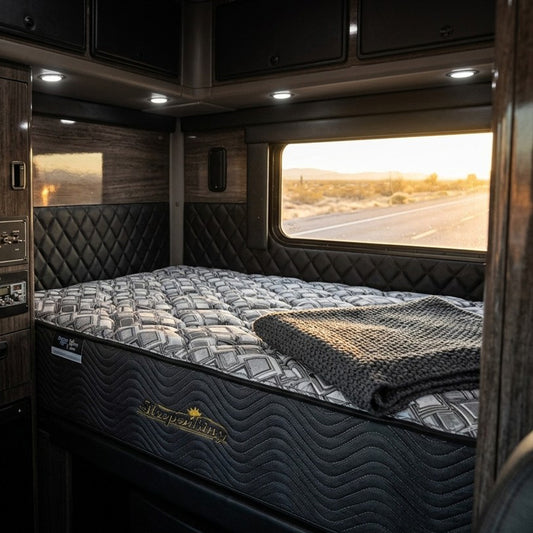
Quick answer: Most long-haul truck drivers sleep in the sleeper berth of their own truck, parked at a truck stop, a rest area, a shipper or receiver that allows overnight parking, or a paid truck parking lot. The hard part isn't the sleeping, it's finding a safe, legal spot before your hours run out. Plan your stop early, have a backup, use a parking app or a reserved spot, and set up your sleeper so the time you do get counts.
Ask any driver what makes the job hard and parking comes up fast. According to American Transportation Research Institute (ATRI) research, drivers spend an average of about 56 minutes a day looking for parking, and in the U.S. DOT's 2019 Jason's Law truck parking survey, 98% of drivers said they regularly have trouble finding safe parking. Here's how to make it easier, and how to sleep better once you're in.
Where do truck drivers sleep?
- Truck stops: The most common choice. Fuel, food, showers and security lighting, but lots fill up by early evening.
- Rest areas: Free and right off the highway, but spaces are limited and time limits vary by state. Check posted signs.
- Shippers and receivers: Some let you park overnight before an early appointment. Always ask; never assume.
- Paid and reserved parking: Major truck stop chains and private lots sell reserved spots. It costs money, but it guarantees a place to stop.
- Some big-box and retail lots: A few allow overnight truck parking, many don't. Get permission first and respect local rules.
Avoid on-ramps, off-ramps and highway shoulders except in a true emergency. They're dangerous, often illegal, and you won't sleep well with traffic flying by.
How to find truck parking before your clock runs out
- Plan your stop in the morning. Know where you'll be when your 11 or 14 runs out, and pick that spot before you roll.
- Always have a backup. Pick a second spot 30 to 60 minutes before your first choice, in case the lot is full.
- Use a truck parking app. Apps like Trucker Path show truck stops, rest areas and driver-reported parking availability.
- Stop earlier when you can. Lots fill up fast in the evening, especially near big freight hubs. Rolling in mid-afternoon usually means more choices.
- Reserve a spot on tough routes. Paying for a reserved space can be cheaper than an hour of searching or a parking ticket.
- Use the split sleeper berth. A 7/3 or 8/2 split can let you stop when parking is available instead of when your clock forces you to. See our split sleeper berth guide.
How to pick a safe spot
- Light and people matter. A well-lit, busy truck stop is safer than an empty lot.
- Back in when you can, so you can pull straight out, and park where you can see your trailer.
- Lock your doors and keep valuables out of sight.
- Trust your gut. If a spot feels wrong, move on, even if it costs you some time.
- Let someone know where you're parked for the night.
10 tips to sleep better once you're parked
- Pick a quieter row. Park away from the fuel island, the entrance and the reefer row when you have a choice.
- Find level ground. Sleeping on a slant pushes you against one wall all night.
- Black out the cab. Close the bunk curtain all the way and cover the windows. Truck stop lights are bright enough to wake you through closed eyes.
- Cover the noise. Foam earplugs, a small fan or a white noise app turn idling engines into a steady hum.
- Get the temperature right. Most people sleep best in a cool room, around 60 to 67°F. Use an APU, bunk heater or cooling setup.
- Keep a routine. The same wind-down steps every night (curtains, teeth, phone on do-not-disturb) tell your body it's time to sleep, wherever you are.
- Cut caffeine early. Stop energy drinks and coffee about six hours before you plan to sleep.
- Stretch before bed. A few minutes of stretching after a long day of sitting helps you fall asleep faster and wake up less stiff.
- Keep your phone dim and face down. Scrolling keeps your brain switched on.
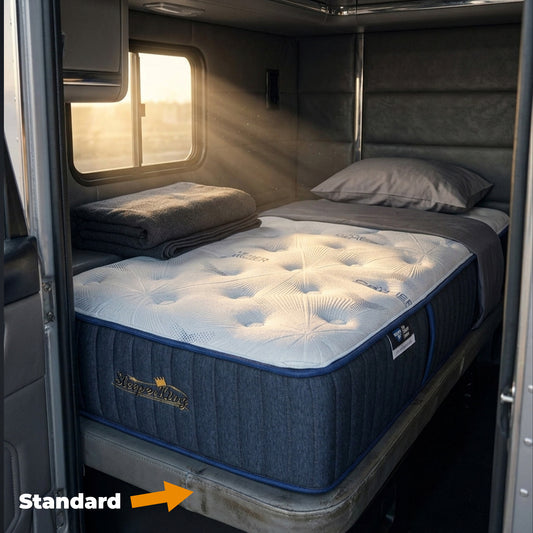
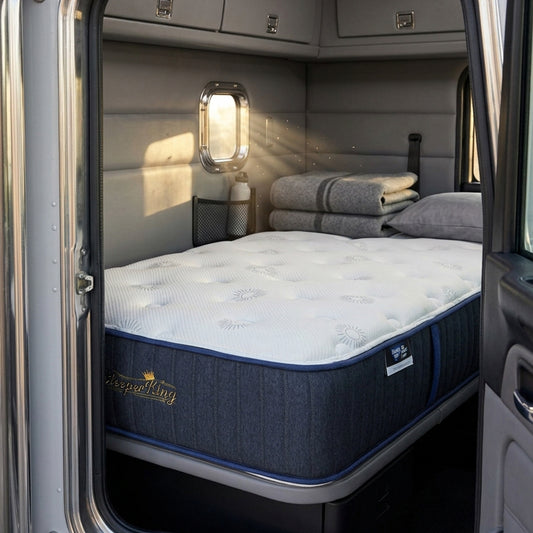
- Sleep on a real mattress. Thin factory foam bottoms out and leaves you sore. A mattress that fits your bunk and supports your body is the one upgrade that helps every single night.
For more on getting real rest in the cab, see sleeping in a semi truck.
Make every stop count
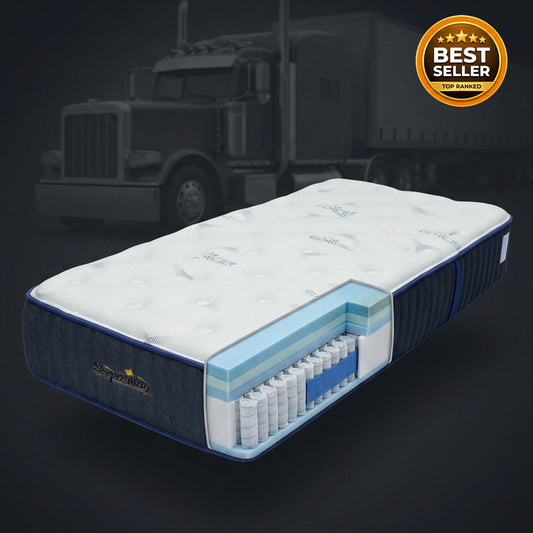
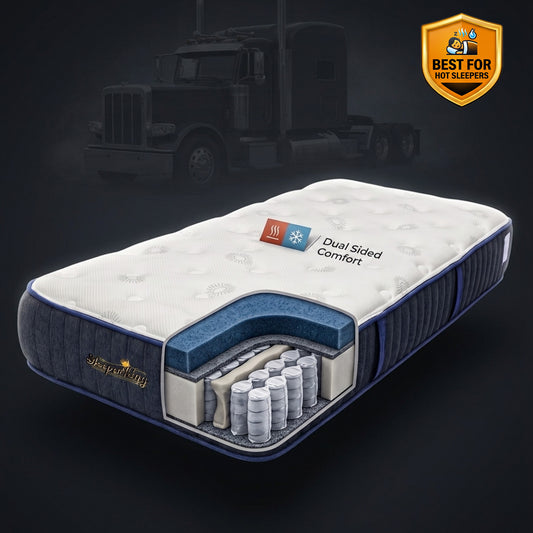
When parking is tight and your sleep window is short, the quality of that sleep matters even more. Every SleeperKing semi truck mattress is a 12-inch hybrid made in the USA with Spring Air components, built to fit 36x80, 39x80 and 42x80 sleeper bunks, with free shipping.
- Classic: 850 individually encased coils and a dual steel seating edge.
- Serenity: 1,000 comfort coils with a copper-infused lumbar layer for your lower back.
- Premium: double-sided, with a cool gel side for hot nights and a warming side for cold ones.
Not sure what size you need? Check our semi truck mattress size guide.
Frequently asked questions
Where do truck drivers sleep?
Most long-haul drivers sleep in the sleeper berth of their truck, parked at a truck stop, rest area, shipper or receiver that allows it, or a paid truck parking lot.
Can truck drivers sleep at rest areas?
Yes, in most places, but spaces are limited and time limits vary by state. Check the posted signs at each rest area.
How do truckers find parking at night?
Plan the stop in the morning, pick a backup, use a truck parking app, stop earlier when possible, and reserve a paid spot on routes where parking is tight.
Is it safe to sleep in a semi truck at a truck stop?
Generally, yes, especially at well-lit, busy truck stops. Lock your doors, keep valuables out of sight, park where you can see your trailer, and move on if a spot doesn't feel right.
How can I sleep better in my truck at a truck stop?
Park away from the fuel island and reefers, block out light completely, cover noise with earplugs or a fan, keep the cab cool, and sleep on a mattress that fits your bunk and supports your body.