Quick answer: Sleeping in a semi truck gets a lot better when you block out light completely, control noise with earplugs or a fan, keep the sleeper between about 60 and 67°F, park somewhere quiet and level, keep the same sleep window as often as your loads allow, cut caffeine six hours before bed, and replace a thin stock mattress with one that fits your bunk. Use the split sleeper berth rule (7/3 or 8/2) to grab rest when your body actually wants it.
SleeperKing's owner, Rich Petry, spent 19 years over the road before he ever sold a mattress. He knows the difference between being off duty and actually being rested — and that most of what keeps drivers awake in the bunk is fixable. Here's what works.
1. Make the sleeper truly dark
Truck stops are lit like stadiums, and daytime sleep is part of the job. Light hitting your eyes, even through closed eyelids, tells your brain it's time to be awake. Close the bunk curtain all the way, add blackout panels or reflective covers to the windshield and side windows, and tape over small LEDs on chargers and the dash. A contoured sleep mask is the cheapest fix of all.
2. Control the noise
Idling reefers, air brakes, and the guy who parks next to you at 2 a.m. You can't stop it, but you can cover it. Foam earplugs block a lot of sharp noise. A small fan or white-noise app turns the background into a steady hum that's easier to sleep through. Some drivers use both.
3. Get the temperature right
Most people sleep best in a cool room — roughly 60 to 67°F. In a sleeper that means planning ahead: an APU or bunk heater in winter, and in summer, a battery cooling setup, vent fans, or simply parking in shade with the nose toward the breeze. Your bedding matters too: a cool-to-the-touch mattress cover and breathable sheets keep heat from building up under you.
4. Pick your parking with sleep in mind
When you can, park away from the fuel island, the entrance, and the reefer row. Back rows are usually quieter. A level spot matters more than people think — sleeping on a slant pushes you toward one wall all night. Truck parking apps make it easier to find a spot before your clock runs out, so you're not taking whatever's left at the end of a 14-hour day. More on that in our truck parking and sleep tips.
5. Use the split sleeper berth rule to your advantage
Under FMCSA hours-of-service rules, property-carrying drivers can split their required 10 hours off duty into two periods: at least 7 hours in the sleeper berth plus at least 2 more hours off duty or in the sleeper, totaling at least 10 hours — the common 7/3 and 8/2 splits. Used that way, neither period counts against your 14-hour window.
That flexibility lets you sleep when you're actually tired instead of forcing a full 10 hours at the wrong time. For a step-by-step example of how a split recalculates your clock, see our split sleeper berth rules guide, and check your ELD before you plan one.
6. Keep a consistent sleep window when you can
Your body runs on a clock. Irregular schedules are the hardest part of trucking sleep, but even a partial routine helps: the same wind-down steps every time (shut the curtains, brush your teeth, phone on do-not-disturb) tell your brain sleep is coming, wherever you're parked.
7. Watch the caffeine and the late meals
Caffeine can stay in your system for hours. Try to stop energy drinks and coffee about six hours before you plan to sleep. Heavy, greasy truck stop meals right before bed can make sleep lighter and more restless, too — eat earlier when you can, and keep something light in the cab for late nights.
8. Get your screen time under control
Scrolling in the bunk keeps your brain switched on. If you watch something to wind down, set a timer and turn the brightness all the way down. Night mode on your phone helps a little; putting it face-down helps more.
9. Move your body during the day
Sitting for 11 hours and then lying down for 10 isn't how bodies are built to work, and it's a big reason back pain from driving is so common. A 10-minute walk around the lot, some stretches at the back of the trailer, or a few bodyweight exercises during your 30-minute break all help you fall asleep faster and wake up less stiff.
10. Don't ignore snoring or daytime sleepiness
If you snore loudly, wake up gasping, or feel drowsy behind the wheel even after a full break, talk to a doctor. Sleep apnea is common among drivers, it's treatable, and getting it handled can make a bigger difference to your rest than anything else on this list.
11. Replace the stock mattress
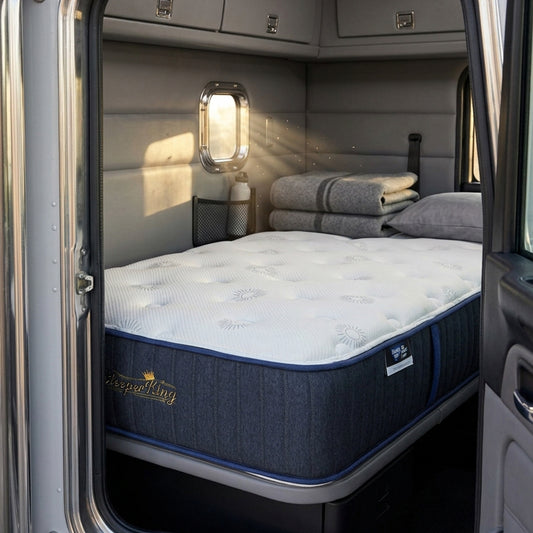
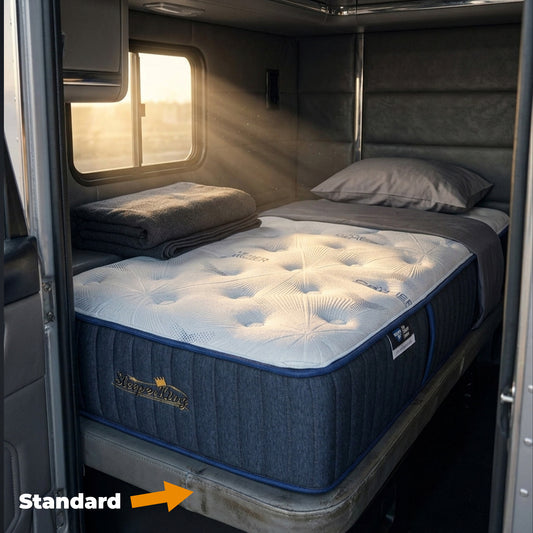
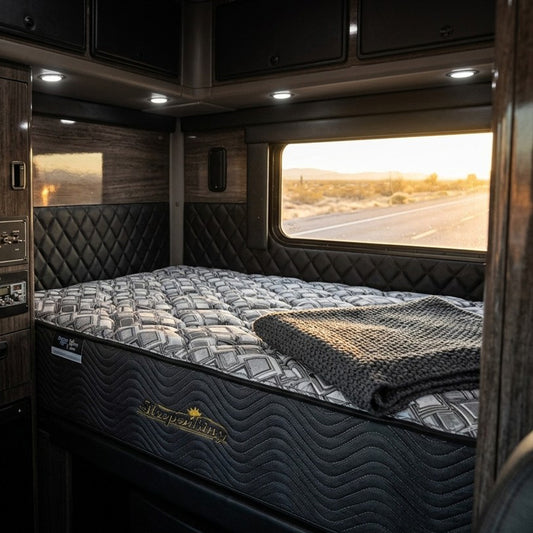
Factory sleeper mattresses are often just a few inches of foam. They bottom out, you feel the bunk frame, and you wake up with a sore back and hips. Upgrading to a mattress built for your bunk size is the one change that improves every single night in the truck.
Every SleeperKing trucker mattress is a 12-inch hybrid with coils and foam, cut to the standard sleeper sizes — 36×80, 39×80 and 42×80 — and shipped free, roll-packed so it fits through the cab door. Find your bunk size in our semi truck mattress size guide, then pick a model with our guide to the best semi truck mattress.
12. Upgrade the pillow and bedding too
A flat pillow undoes a good mattress. Pick one that keeps your neck in line with your spine for the way you sleep — thicker for side sleepers, thinner for stomach sleepers. Wash your bedding regularly; a fresh bunk is easier to relax in after a long run.
Frequently asked questions
How do truck drivers get good sleep in the truck?
The biggest wins are total darkness, noise control, a cool cab, a quiet level parking spot, a consistent wind-down routine and a mattress that fits the bunk and supports your body.
What is the split sleeper berth rule?
Property-carrying drivers can split the required 10 hours off duty into two periods — at least 7 hours in the sleeper berth and at least 2 hours off duty or in the sleeper, totaling at least 10 hours. Neither period counts against the 14-hour driving window.
What temperature should a sleeper cab be for sleeping?
Most people sleep best somewhere around 60 to 67°F. Use an APU, bunk heater or cooling setup to stay in that range, along with breathable bedding.
Why do I wake up sore after sleeping in my truck?
Often it's the mattress. Thin factory foam bottoms out, letting your hips and shoulders press into the bunk frame. A thicker hybrid mattress sized to your bunk spreads your weight and supports your spine.