Quick answer: The most reliable way to stay warm in a semi truck sleeper without idling is a diesel bunk heater (also called a fuel-fired or air heater), which burns a small amount of fuel and vents its exhaust outside. An APU is the other main option. Back it up by sealing drafts with insulated curtains and window covers, layering your bedding, and sleeping on a mattress with a warming surface. Never run an unvented propane or portable fuel heater inside a closed cab, and keep a carbon monoxide detector in the sleeper.
Winter is hard on drivers. Cold cabs mean broken sleep, and idling all night to stay warm burns fuel, wears the engine and is restricted in many states and cities. Here's how to stay warm, sleep well and stay safe when the temperature drops.
Bunk heater vs. APU vs. idling
| Option | How it works | Good to know |
|---|---|---|
| Diesel bunk heater | Burns a small amount of diesel from your tank and blows warm air into the sleeper. Exhaust vents outside. | Very fuel efficient for heat only. Needs regular maintenance and a clear exhaust and air intake. |
| APU (auxiliary power unit) | A small engine or battery system that powers heat, air conditioning and electrical outlets without running the main engine. | Handles heat and cooling. Bigger upfront cost. |
| Idling the engine | Runs the main engine for cab heat. | Burns far more fuel, adds engine hours, and anti-idling rules apply in many states and cities. Check local rules. |
For most drivers who just need heat at night, a diesel bunk heater is the simplest, most efficient choice. If you also need air conditioning in summer, an APU covers both.
Carbon monoxide: the rule you can't skip
Carbon monoxide has no smell and no color, and it can build up fast in a small, sealed sleeper. Keep yourself safe:
- Never use an unvented heater (propane, kerosene or portable fuel heaters) inside a closed cab.
- Put a battery-powered carbon monoxide detector in the sleeper and test it regularly.
- Keep exhaust clear. If you're snowed in, check that snow isn't blocking your truck's exhaust or your bunk heater's exhaust and air intake.
- Maintain your heater. Have bunk heaters and APUs serviced per the manufacturer's schedule.
- Know the warning signs: headache, dizziness, nausea or unusual sleepiness. If you notice them, get fresh air right away and get help.
8 ways to keep your sleeper warmer
- Close off the sleeper. Pull the bunk curtain all the way so you're heating the sleeper, not the whole cab and windshield.
- Insulate the windows. Insulated window covers and a windshield cover cut a lot of heat loss through the glass.
- Seal drafts. Check door and window seals before winter and replace worn weatherstripping.
- Park smart. Park out of the wind when you can, nose into it if you can't, and avoid low spots where cold air settles.
- Layer your bedding. A wool or fleece blanket plus a comforter traps heat better than one heavy blanket. A winter-rated sleeping bag works as a backup.
- Dress for bed. Wool socks and a warm base layer go a long way. Keep a knit hat handy for the coldest nights.
- Use low-draw electric warmth carefully. A 12-volt heated blanket can help, but watch your battery so you can still start the truck in the morning.
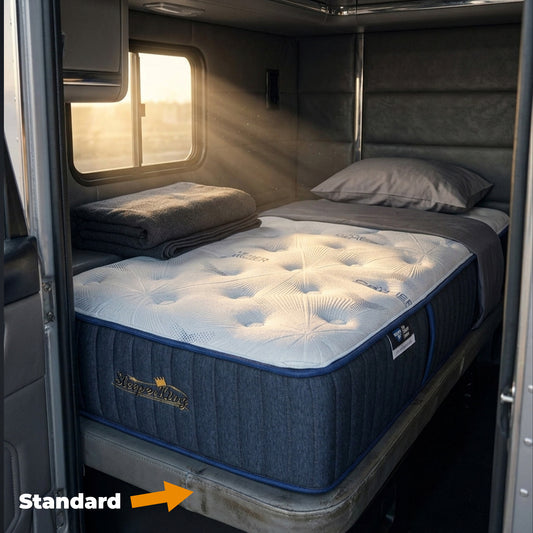
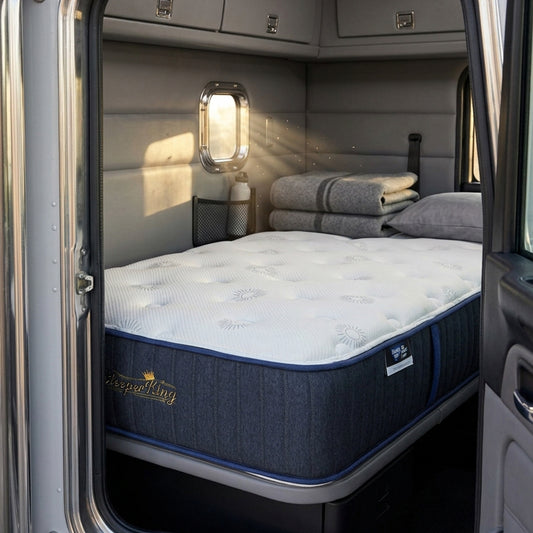
- Get off the cold platform. A thin mattress lets cold come up from the bunk platform. A thick mattress puts more insulation between you and the cold.
Your mattress matters more in winter
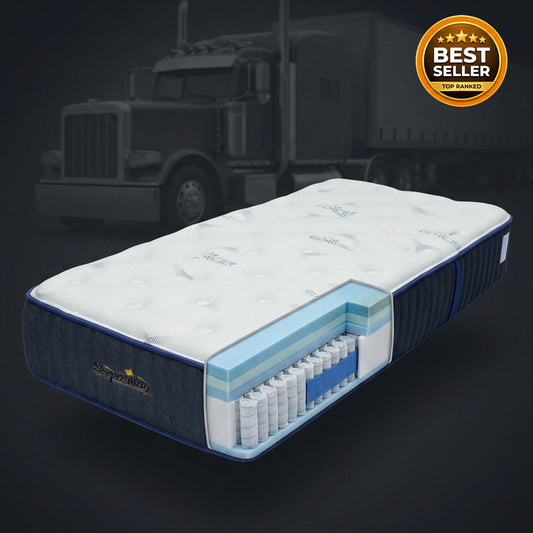
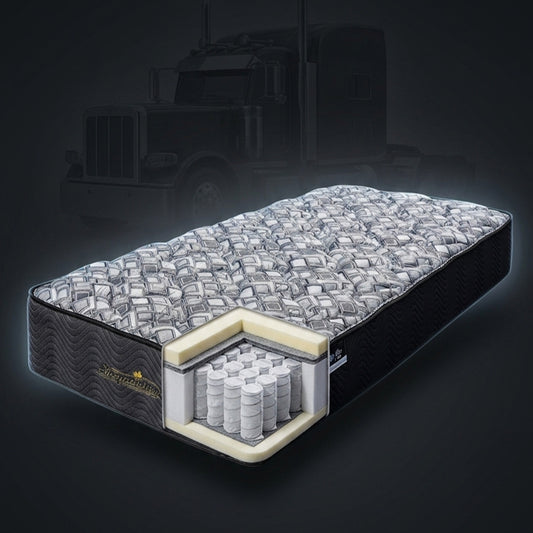
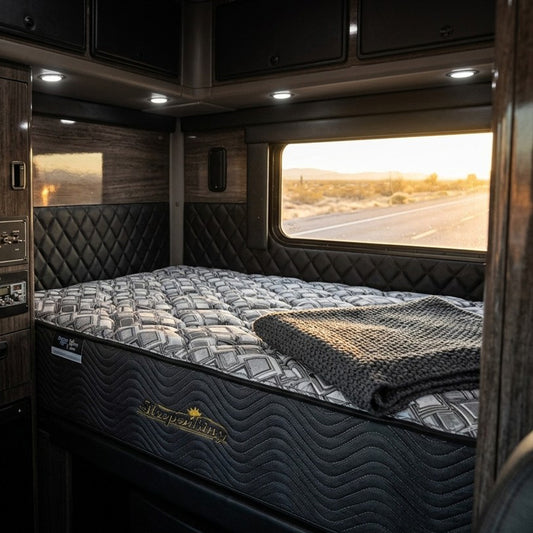
A thin factory mattress doesn't just leave you sore, it leaves you cold. A 12-inch hybrid puts real insulation between you and the bunk platform, and the right surface makes a difference on the coldest nights.
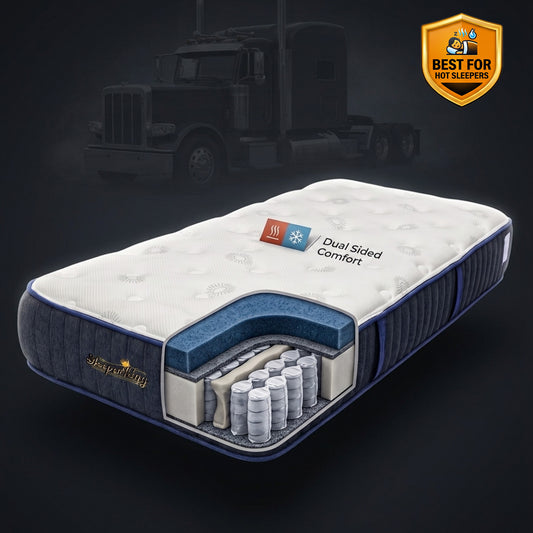
The SleeperKing Premium is built for exactly this. It's double-sided, with a warming fabric side for winter and a cool gel side for summer, so you flip it when the seasons change. Underneath, 1,000 individually encased coils and three-zone support keep your spine aligned.
Every SleeperKing semi truck mattress is a 12-inch hybrid made in the USA with Spring Air components, in 36x80, 39x80 and 42x80, with free shipping. Prefer a firmer bed? The Classic has 850 encased coils. Dealing with a stiff lower back in the cold? The Serenity adds a copper-infused lumbar layer. Check your fit with our semi truck mattress size guide.
Winter sleep tips for the road
- Plan parking early. Lots fill fast when weather shuts roads down. See our truck parking and sleep tips.
- Keep a cold-weather kit: extra blankets, water, snacks, a flashlight, gloves and a phone charger, in case you're stuck for a while.
- Use your break time well. A split sleeper berth can let you wait out the worst weather. See our split sleeper berth guide.
- Don't overheat. Most people sleep best around 60 to 67°F. Too warm is as bad as too cold. More in sleeping in a semi truck.
Frequently asked questions
How do truck drivers stay warm at night without idling?
Most use a diesel bunk heater or an APU, plus insulated curtains and window covers, layered bedding and a thick mattress. Bunk heaters burn very little fuel and vent their exhaust outside.
What is a diesel bunk heater?
A small heater that burns diesel from the truck's tank to blow warm air into the sleeper, with its exhaust vented outside. It heats the sleeper using far less fuel than idling the engine.
Is it safe to use a propane heater in a semi truck sleeper?
Unvented propane, kerosene and portable fuel heaters are a carbon monoxide risk in a closed cab and shouldn't be used there. Use a heater designed for trucks that vents outside, and keep a carbon monoxide detector in the sleeper.
What temperature should a sleeper cab be in winter?
Most people sleep best around 60 to 67°F. Layered bedding lets you keep the heater lower and still sleep warm.
Does a mattress help keep you warm in a truck?
Yes. A thick mattress insulates you from the cold bunk platform, and a mattress with a warming side, like the SleeperKing Premium, holds heat better on winter nights.